The Future of workspaces is modern workplace is going through a major transformation. Offices today are no longer just functional spaces with desks, meeting rooms, and workstations. They are becoming dynamic environments designed to support productivity, collaboration, and employee wellbeing. In a competitive business landscape where organizations constantly strive to attract talent and enhance performance, the role of workplace design has become more strategic than ever.
At FocusOn Interiors, we believe that the future of workspaces lies at the intersection of sustainability, technology, and human wellness. When these three elements come together thoughtfully, workplaces become more efficient, more responsible, and more inspiring for the people who use them every day.
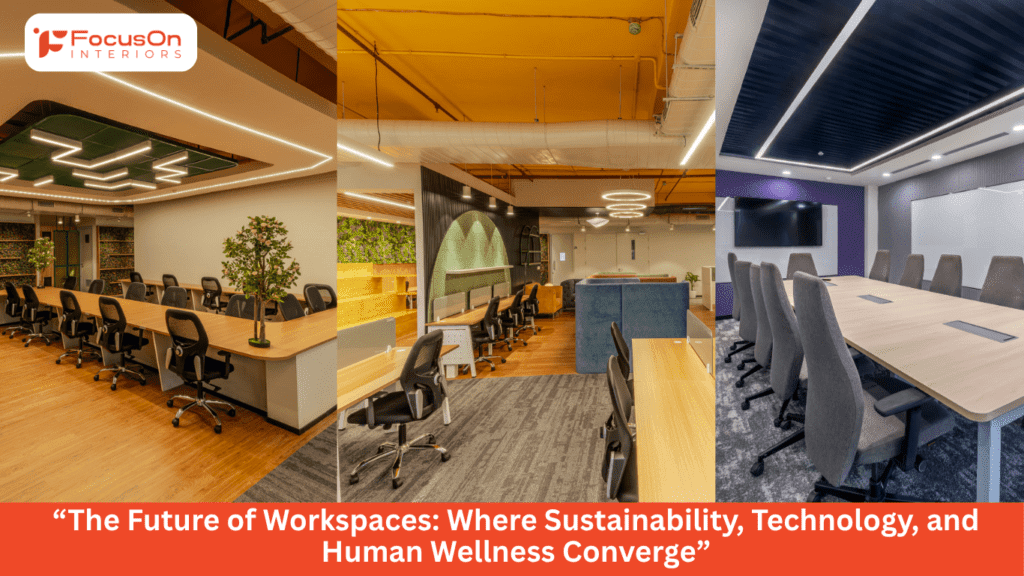
Sustainability as a Design Foundation
Sustainability is no longer an optional feature in workplace design—it has become a core requirement. Companies today are increasingly aware of their environmental responsibilities, and this awareness is shaping how office interiors are designed and executed.
From the choice of materials to energy-efficient lighting systems, sustainable design practices are becoming a fundamental part of commercial interior projects. The use of eco-friendly materials, low- VOC paints, modular furniture, and responsible sourcing not only reduces environmental impact but also creates healthier indoor environments.
At the same time, sustainability also aligns with cost efficiency. Smart design strategies such as optimized space planning, natural light utilization, and energy-efficient infrastructure can significantly reduce long-term operational costs for organizations.
In a competitive market, businesses are also realizing that sustainable workplaces reflect their values and strengthen their brand image. Clients, partners, and employees increasingly appreciate companies that prioritize responsible design and environmental consciousness.
Technology as an Enabler of Smarter Workspaces
Technology is another key driver shaping the future of office environments. Modern workplaces must support seamless connectivity, flexibility, and hybrid work models.
Smart office systems are now becoming integral to workplace design. Automated lighting, climate control, occupancy sensors, and integrated meeting room technologies help create efficient and responsive work environments. These systems allow organizations to manage their spaces more intelligently while improving employee comfort and productivity.
Technology also plays a crucial role in supporting collaboration. With hybrid work becoming more common, meeting rooms and collaboration zones must be equipped with advanced audio-visual systems, digital interfaces, and flexible layouts that allow both in-office and remote participants to interact effectively.
From our experience in delivering turnkey commercial interiors, integrating technology at the design stage is essential. Rather than adding tech solutions later, successful projects embed digital infrastructure into the spatial planning process itself. This ensures that the workspace remains adaptable as organizational needs evolve.
Human Wellness at the Center of Workplace Design
While sustainability and technology are critical, the most important element in any workspace is the people who use it. Employees today expect work environments that support not only productivity but also physical and mental wellbeing.
Designing with human wellness in mind means creating spaces that are comfortable, inspiring, and flexible. Access to natural light, improved indoor air quality, ergonomic furniture, and thoughtful spatial planning can significantly impact how employees feel and perform at work.
Workplaces are also evolving to include diverse zones—quiet areas for focused work, collaborative spaces for teamwork, and breakout zones where employees can relax or recharge. These varied environments support different working styles and help create a more balanced workplace experience.
In the current competitive talent market, companies are increasingly recognizing that a well-designed office can influence employee satisfaction and retention. A workspace that prioritizes wellbeing sends a strong message that people are valued, and this directly contributes to stronger organizational culture.
The Role of Integrated Design and Execution
Creating future-ready workplaces requires more than just good design ideas. It demands a seamless integration of design thinking, technical expertise, and efficient execution.
At FocusOn Interiors, our approach is built around delivering end-to-end solutions, where design, planning, and execution work together to achieve the client’s vision. By aligning sustainability strategies, technological integration, and user-centric design, we aim to create spaces that are both functional and forward-looking.
Every organization has unique needs, and workplace design must respond to those specific requirements. Whether it is optimizing space for hybrid work, incorporating sustainable materials, or designing collaborative environments, the goal is always to create spaces that enhance how people work and interact.
Looking Ahead
As businesses continue to evolve, workplaces will continue to adapt alongside them. The offices of the future will be smarter, greener, and more human-centric. They will support flexibility, encourage collaboration, and prioritize the wellbeing of the people who spend a significant part of their day within these environments.
For organizations operating in a highly competitive market, investing in thoughtful workplace design is no longer just about aesthetics—it is about strategy. The right workspace can improve productivity, strengthen brand identity, and create an environment where people feel motivated to do their best work.
The convergence of sustainability, technology, and human wellness is not just shaping the future of workspaces; it is redefining what a workplace can truly be. And for companies willing to embrace this shift, the opportunity to create meaningful and impactful environments has never been greater.