From Walls to Ceilings: Creative Uses of Color in Modern Office Interiors
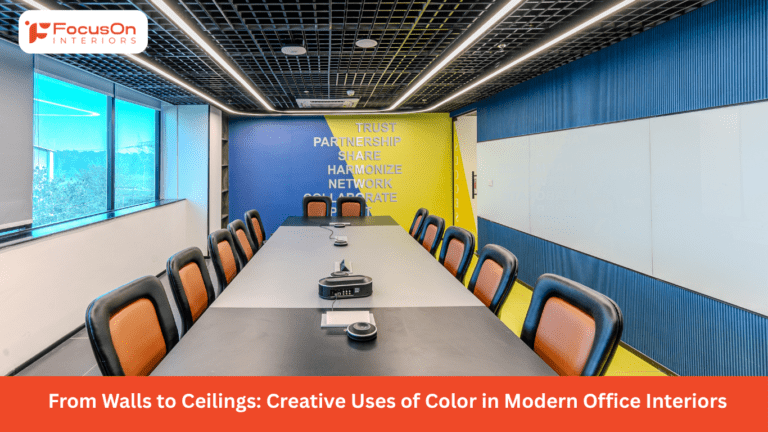
In today’s Modified workplace area, color is no longer a finishing touch added at the end of a design process. It has become a strategic tool-one that influences productivity, supports brand identity, and shapes how employees experience the workplace on a daily basis. As organizations rethink their offices to support hybrid work, collaboration, and employee wellbeing, color is playing a far more deliberate and functional role in modern office interiors.
Traditionally, commercial offices relied heavily on neutral palettes- greys, whites, and beiges- chosen primarily for their perceived professionalism and long-term flexibility. While these tones still have relevance, contemporary workplaces are moving beyond uniform neutrality. Businesses now recognise that thoughtful colour application can enhance spatial clarity, reinforce organisational culture, and create environments that feel energising rather than monotonous.
Colour as a Business Tool, Not Just an Aesthetic Choice
One of the most significant shifts in commercial interior design is the move toward purpose-led colour planning. Colour is increasingly being used to support how a space functions, rather than simply how it looks. Different zones within an office-focus areas, collaboration spaces, informal meeting zones, and social hubs-benefit from distinct colour strategies.
For example, calmer tones such as muted blues, greens, and earthy neutrals are often introduced in focus-driven areas to reduce visual noise and support concentration. In contrast, collaborative zones and breakout spaces may feature warmer or more vibrant hues that stimulate interaction, creativity, and energy. This zoning through colour helps employees intuitively understand how a space is meant to be used, without the need for signage or rigid partitions.
From a commercial perspective, this approach adds value by improving space utilisation and employee comfort- two factors that directly impact workplace efficiency.
Extending Colour Beyond Walls
Modern office interiors are also redefining where colour can be applied. Instead of limiting colour to walls, designers are increasingly extending it across ceilings, floors, furniture, and architectural elements. Ceilings, in particular, have emerged as an unexpected yet impactful canvas.
Exposed ceilings in large office spaces can sometimes feel visually overwhelming or industrial. Introducing colour-whether through painted services, acoustic baffles, or suspended elements- helps bring visual order and warmth to these spaces. In open-plan offices, ceiling colour can also be used to subtly define zones without constructing physical barriers, maintaining openness while creating spatial distinction.
Floors and soft furnishings further complement this layered colour strategy, ensuring continuity across the space and avoiding a fragmented visual experience.
Reflecting Brand Identity Through Colour
For many organisations, the workplace has become a powerful extension of brand identity. Colour plays a critical role in translating brand values into a physical environment. However, the approach has matured significantly. Rather than applying brand colours overtly or excessively, companies are opting for nuanced interpretations of their palette.
Accent colours inspired by brand hues may appear in collaboration spaces, signage, or custom furniture, while more subdued tones dominate work areas. This ensures the office feels aligned with the brand without becoming visually overwhelming. From a commercial standpoint, this restrained approach creates timeless interiors that age well, reducing the need for frequent redesigns as branding evolves.
Supporting Employee Wellbeing and Experience
Employee wellbeing has become a central consideration in workplace design, and colour has a measurable impact in this area. Natural tones, biophilic-inspired palettes, and softer contrasts are increasingly being introduced to create calming environments that reduce stress and visual fatigue.
Access to daylight, when paired with appropriate colour selection, further enhances the quality of the workspace. Lighter shades help reflect natural light deeper into the office, improving overall brightness and reducing reliance on artificial lighting—an advantage from both a wellbeing and energy-efficiency perspective.
In commercial offices where teams spend long hours indoors, these subtle design decisions contribute to improved comfort, engagement, and satisfaction.
Flexibility and Longevity in Colour Choices
While experimentation with colour is on the rise, commercial office design still demands longevity and adaptability. Organisations are cautious about overly trend-driven palettes that may feel dated within a few years. As a result, many offices adopt a balanced strategy: neutral base colours paired with adaptable accent elements that can be updated with minimal disruption.
This approach allows businesses to refresh their interiors over time- by changing soft furnishings, graphics, or feature elements- without undertaking costly structural modifications. It is a commercially sound strategy that aligns design creativity with long-term operational efficiency.
The Future of Colour in Commercial Offices
As workplaces continue to evolve, the role of colour will only become more strategic. With data-driven design insights, greater emphasis on employee experience, and growing awareness of psychological impact, colour selection in office interiors is moving firmly into the realm of informed decision-making.
From walls to ceilings, colour is shaping offices that are not only visually engaging but also highly functional, adaptable, and aligned with business goals. In modern commercial interiors, colour is no longer about decoration- it is about intention, performance, and creating workplaces that truly work for the people who use them.